Fake Residence Permit: How to Spot One
This guide helps employers and landlords verify the authenticity of residence permits.
- Posted:
- Last updated: October 8, 2026
- By: Logan Pierce
- 19 minutes
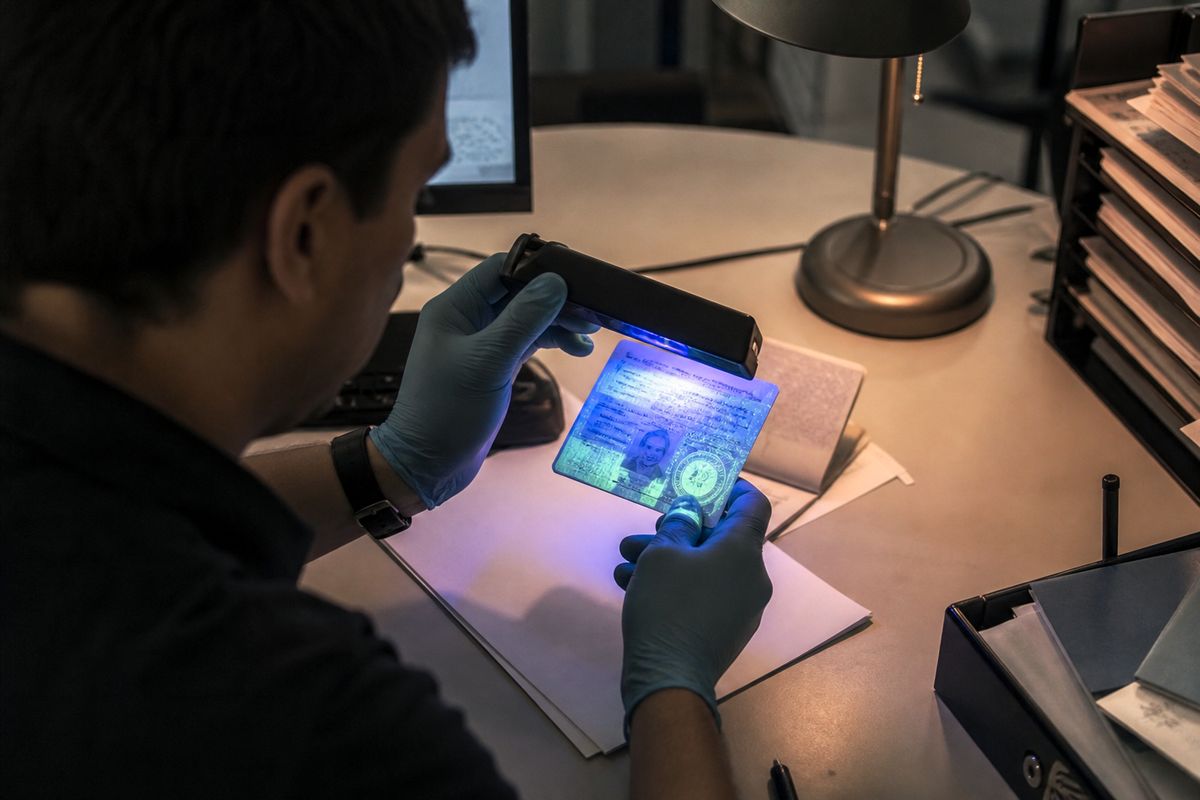
A fake residence permit is a counterfeit or altered immigration document that lacks the security features mandated by law, such as laser-engraved biographical data and integrated chips1. You can spot one by checking three key elements:
- Material and sound: genuine UK permits are polycarbonate, feel thicker than a driving licence, and produce a distinctive sound when flicked2
- Document number format: UK permit numbers start with two letters, followed by 'X' or a digit, then six digits, and should never be raised on the card surface2
- Security features: authentic permits display color-shifting ink on the chip symbol2, tactile national flowers on the back2, and grey-scale (not color) photographs2
What Makes a Residence Permit Legitimate
A legitimate residence permit includes specific security features that help prevent forgery. Understanding these elements is crucial for verifying authenticity.
Core Security Features
Genuine residence permits incorporate advanced security features. Holograms, microprinting, and UV security features are common. For example, the EU mandates the use of a DOVID (Diffractive Optically Variable Image Device) on the front of residence permits, which enhances machine verification1. When illuminated with UV light, authentic documents show subtle patterns that counterfeit ones do not replicate3.
Standard Information Fields
Each residence permit contains essential information fields. These typically include the issuing authority, biometric data, and a document number format. For UK Biometric Residence Permits, the document number starts with two letters, followed by 'X' or a digit, and concludes with six digits. This number should not be raised on the card surface2. Biographical data, including the holder's photograph and signature, must be laser-engraved into the document to ensure durability and prevent alterations1.
Material and Printing Quality
The material and printing quality of a residence permit play a vital role in its legitimacy. Authentic UK permits are made entirely from polycarbonate, making them thicker than a driving licence2. They produce a distinctive sound when flicked, which is a sign of their robust construction. Genuine permits also feature tactile designs, such as the four national flowers of the UK, which can be felt and seen under light2.
When examining a residence permit, look for these characteristics. If any element seems off, it may indicate a counterfeit document. Always use authorized verification methods to confirm the validity of the permit.
Visual Red Flags in Fake Residence Permits
Fake residence permits often display clear visual indicators of their illegitimacy. Identifying these red flags can help you avoid falling victim to document forgery.
Photo Quality Issues
One of the most noticeable signs of a counterfeit residence permit is poor photo quality. Authentic permits use high-resolution images that are integrated into the document using secure technology. If you notice mismatched lighting, low resolution, or visible editing marks on the photo, it is likely fake. For instance, the EU requires that biographical data, including photographs, be laser-engraved, ensuring that images are sharp and clear1. If the photo appears blurry or poorly lit, consider it a warning sign.
Typography Errors
Examine the text closely for typography errors. Fake residence permits may use incorrect fonts or exhibit spacing inconsistencies. Look out for spelling mistakes in official text, as these can indicate a lack of attention to detail typical of counterfeit documents. Genuine permits follow strict guidelines regarding font and layout. Any deviation from standard typography should raise suspicion.
Color Discrepancies and Lamination Quality
Authentic residence permits have specific color schemes and lamination quality. For example, UK Biometric Residence Permits are made from polycarbonate and exhibit a distinct sound when flicked2. If the permit feels flimsy or shows color discrepancies, it may be counterfeit. Genuine documents also feature a tactile design that can be felt and seen under light2. Poor lamination quality, such as bubbling or peeling, is another red flag.
When checking a residence permit, look for these visual cues. If you notice any issues, it’s crucial to investigate further using authorized verification methods. Always trust your instincts; if something feels off, it’s worth a second look.
Security Features to Check
When verifying a residence permit, it's essential to examine its security features closely. Authentic documents incorporate various elements designed to prevent forgery.
Holographic Elements
Genuine residence permits often include holographic features. These elements should display a clear image that shifts when viewed from different angles. For example, look for the International Civil Aviation Organisation 'chip inside' symbol printed with Optically Variable Ink (OVI). This ink changes color depending on the angle, giving it a metallic quality2. If the holograms appear dull or static, it may indicate a counterfeit.
UV-Reactive Ink and Watermarks
Using ultraviolet (UV) light can help identify counterfeit documents. Genuine residence permits typically contain UV-reactive ink and watermarks that do not fluoresce brightly. Under UV light, authentic documents reveal subtle patterns and designs that counterfeit ones often lack3. Look for watermarks that are integrated during the paper manufacturing process, showing gradual tone changes instead of bright fluorescence3. If the permit glows excessively under UV light, it is likely a fake.
Tactile Features and Laser Engraving
Feel the document for tactile features, such as embossing and laser engraving. According to EU regulations, biographical data must be integrated into the material using secure technology like laser engraving1. This process makes it difficult for counterfeiters to replicate. Genuine UK Biometric Residence Permits also feature a tactile design on the back that incorporates the four national flowers of the United Kingdom. You should be able to feel these raised elements as you run your finger over the surface2. If the permit lacks these tactile features, it may be a forgery.
In summary, when checking a residence permit, focus on holographic elements, UV-reactive ink, and tactile features. If any of these security features are missing or appear compromised, consider the document suspicious and verify its authenticity through authorized channels.
Document Number and Data Verification
Understanding the document number format and verifying data is crucial in identifying a fake residence permit. Each legitimate permit has a unique number that follows a specific pattern. For UK Biometric Residence Permits, the document number starts with two letters, followed by either 'X' or a digit, and concludes with six digits. This number should not be raised on the card surface2. If you encounter a permit where the number appears altered or raised, it is likely counterfeit.
Decoding Document Number Formats
To decode the document number, check the initial characters. The first two letters identify the issuing authority. The third character, either 'X' or a digit, helps in further classification. The final six digits are unique identifiers. If the format deviates from this pattern, you should be suspicious.
Cross-Referencing Issuing Dates
Next, verify the issuing date against the document's validity period. Most residence permits have a specified duration, typically ranging from one to five years. If the issuing date is too close to the expiration date, it could indicate a fraudulent document. For example, if a permit was issued in January 2023 and is set to expire in February 2023, this should raise a red flag.
Identifying Impossible Date Combinations
Pay attention to any impossible date combinations. For instance, if a residence permit shows an issuing date that is later than the expiration date, it is undoubtedly fake. Additionally, look for any expired security features. Genuine documents often incorporate features that change or degrade over time. If a permit has visible wear on security elements, such as holograms or UV markings, this may indicate it is not legitimate.
When checking a residence permit, always cross-reference the document number and issue dates with the expected formats and validity periods. If you find discrepancies or unusual features, consider using authorized verification methods to confirm the permit's authenticity.
Common Forgery Techniques Used
Counterfeiters employ various techniques to create fake residence permits. Understanding these methods can help you identify forgeries more effectively.
Template Manipulation
One common method is template manipulation. Counterfeiters often use stolen blanks or digital templates of genuine permits. They may purchase these templates from dark web vendors who specialize in document forgery. Once they have a template, they can print or laminate their fake permits, making them look authentic at first glance. However, these forgeries usually lack essential security features, such as laser-engraved biographical data mandated by regulations1.
Photo Substitution Methods
Photo substitution is another prevalent technique. Counterfeiters may take a legitimate photo and substitute it with a different one on a fake permit. Signs of tampering can include mismatched lighting or resolution discrepancies. Authentic residence permits have high-resolution images integrated into the document using secure technology, making them difficult to alter without leaving evidence. If you notice any signs of editing, such as visible marks or unusual shadows, consider the document suspicious.
Sophisticated vs. Amateur Forgeries
There is a significant difference between sophisticated dark web fakes and amateur forgeries. Sophisticated forgers use advanced printing techniques and secure materials to replicate genuine features, such as holograms and microprinting. For example, they may use Optically Variable Ink (OVI) that changes color with viewing angles2. In contrast, amateur forgers often use low-quality materials and printing methods, leading to visible flaws in the document. If a residence permit feels flimsy or shows color discrepancies, it may indicate that it is a poorly made counterfeit.
Recognizing these common forgery techniques will enhance your ability to spot fake residence permits. Always verify authenticity through authorized channels if you suspect a document is forged.
Physical Inspection Methods
Verifying the authenticity of a residence permit involves a thorough physical inspection. You can use simple tests and tools to identify potential counterfeits.
Touch Test
Begin with the touch test. Feel the card for proper thickness, edge quality, and surface texture. Authentic UK Biometric Residence Permits are made from polycarbonate, making them thicker than a typical driving licence2. They should also produce a distinctive sound when flicked. If the permit feels flimsy or shows signs of bending, it may be fake. Additionally, genuine permits feature tactile designs, such as the four national flowers of the UK, which can be felt on the back2. If these features are absent or poorly defined, consider the document suspicious.
Light Test
Next, perform the light test. Hold the document against a light source to check for embedded security threads. Authentic residence permits incorporate features like UV-reactive ink and watermarks that do not fluoresce brightly3. Under light, you should see subtle patterns that are difficult to replicate. If the document glows excessively, it could indicate a counterfeit. You can also look for security threads that are integrated into the material and are visible when held to the light.
Verification Tools
Using tools can enhance your inspection process. A magnifying glass is beneficial for examining microprinting and fine details that are often present on authentic documents. Look for any discrepancies in text or images that may indicate forgery. A UV light can help you reveal hidden features. Genuine documents often have UV-reactive elements that are not visible under normal lighting conditions3.
When inspecting a residence permit, combine these physical inspection methods for a comprehensive evaluation. If any elements appear off or do not meet the expected standards, consider using authorized verification services to confirm authenticity.
Where Fake Permits Are Commonly Sourced
Fake residence permits are often sourced from dark web marketplaces. These platforms host vendors specializing in counterfeit documents. Each vendor typically has a reputation system, allowing buyers to assess the reliability of sellers based on customer feedback. It’s crucial to check these ratings before making any purchases, as the quality of fake documents can vary significantly.
Pricing Ranges for Fake Documents
Pricing for fake residence permits varies widely. Basic fakes can range from $100 to $500, while premium forgeries, which may include advanced security features, can cost over $1,000. The higher-priced documents often attempt to replicate genuine security elements, making them harder to detect at first glance. However, even premium forgeries may lack the intricate details found in authentic documents.
Common Countries for Counterfeit Permits
Certain countries are more frequently targeted for counterfeit residence permits. Countries like the United Kingdom, Germany, and Italy often see high volumes of forgery. For instance, UK Biometric Residence Permits are particularly sought after due to their secure features, such as laser-engraved biographical data1. Similarly, Germany's strict immigration laws make its permits attractive for counterfeiters4.
To protect yourself from potential fraud, be cautious when dealing with documents from these regions. Always verify authenticity through authorized channels, and consider using specialized apps or services for document verification. If a deal seems too good to be true, it likely is.
What to Do If You Suspect a Fake
If you suspect that a residence permit is fake, it’s crucial to act carefully and methodically. Avoid confronting the holder directly, as this could lead to a potentially dangerous situation. Instead, focus on documenting your observations and gathering evidence.
Immediate Steps to Take
Begin by noting any suspicious features of the permit. Take photographs if possible, focusing on aspects like the document number, holograms, and UV security features. Keep a record of the date and time of your observations, as well as any interactions you may have had with the individual. This documentation will be valuable when reporting your concerns.
Who to Contact
Once you have gathered your evidence, report your suspicions to the appropriate authorities. In the UK, you can contact immigration authorities or the local police. Additionally, there are verification hotlines where you can report suspected fraud. For example, the Home Office provides resources for employers to verify the authenticity of residence permits5.
If you’re unsure about which authority to contact, start with the local police. They can guide you on the next steps and help ensure that the situation is handled appropriately.
Legal Protection When Reporting Fraud
When reporting suspected fraud, it’s important to protect yourself legally. In the UK, you should provide as much detail as possible without making accusations. Stick to the facts you have documented. Under U.S. law, reporting suspected fraud can help shield you from liability, especially if the case involves serious offenses like terrorism6.
Always consult legal counsel if you have concerns about your responsibilities or potential repercussions when reporting. This is particularly important if you’re an employer or landlord, as you want to ensure you’re following the legal protocols.
Taking these steps can help you address the situation effectively while minimizing any risks to yourself. Always prioritize safety and follow the proper channels to address your concerns.
Fake Residence Permit Verification Checklist
- Inspection Method
- Visual
- Genuine Features
- Laser-engraved data
- Fake Indicators
- Printed data
- Difficulty to Replicate
- High
- Inspection Method
- Touch
- Genuine Features
- Thick polycarbonate, tactile design
- Fake Indicators
- Flimsy material
- Difficulty to Replicate
- Medium
- Inspection Method
- Light
- Genuine Features
- Embedded security threads, UV-reactive ink
- Fake Indicators
- Excessive glow, no threads
- Difficulty to Replicate
- Low
- Inspection Method
- Visual
- Genuine Features
- Optically Variable Ink (OVI)
- Fake Indicators
- Flat color, no metallic shift
- Difficulty to Replicate
- High
- Inspection Method
- Visual
- Genuine Features
- DOVID with advanced design
- Fake Indicators
- Basic hologram
- Difficulty to Replicate
- Medium
- Inspection Method
- Light
- Genuine Features
- Genuine watermarks, subtle tones
- Fake Indicators
- Bright fluorescence under UV
- Difficulty to Replicate
- High
- Inspection Method
- Touch
- Genuine Features
- Distinct sound when flicked
- Fake Indicators
- No sound or dull sound
- Difficulty to Replicate
- Medium
- Inspection Method
- Visual
- Genuine Features
- Correct permit number format
- Fake Indicators
- Irregular number format
- Difficulty to Replicate
- Low
- Inspection Method
- Light
- Genuine Features
- Security features visible under light
- Fake Indicators
- No features visible
- Difficulty to Replicate
- Medium
- Inspection Method
- Touch
- Genuine Features
- Feels thicker than a driving licence
- Fake Indicators
- Thin and bendable
- Difficulty to Replicate
- Low
Common Mistakes and Misconceptions
Relying Only on Visual Inspection Without Physical Tests
Many people assume that looking at a residence permit under normal lighting is enough to verify its authenticity. This approach misses critical security features that only reveal themselves through touch or specialized light sources. Authentic UK Biometric Residence Permits feature tactile designs on the back incorporating the four national flowers that you can both see and feel2, while counterfeiters struggle to replicate the distinctive sound polycarbonate makes when flicked2. Always combine visual checks with physical tests—feel the thickness, run your finger over raised surfaces, and hold the document against light to examine embedded security threads before drawing conclusions.
Believing UV Light Makes All Security Features Glow Brightly
A widespread misconception is that genuine documents should fluoresce intensely under ultraviolet light. The opposite is true: counterfeit documents typically fluoresce more brightly than genuine ones, which use dull, secure materials3. Authentic watermarks consist of subtle tone changes with both lighter and darker areas and should never react under UV light3. When you shine UV light on a residence permit, look for specific security elements like Optically Variable Ink that shifts color rather than expecting the entire document to glow. If the card lights up excessively, you're likely holding a fake.
Accepting Physical Cards Instead of Using Online Verification
Since June 26, 2025, UK employers can no longer accept biometric residence cards or permits as physical documents alone7. Despite this regulatory change, many landlords and employers continue requesting physical cards without verifying them through official channels. This practice leaves you vulnerable to sophisticated forgeries that replicate visual features convincingly. Instead, use the Home Office online right to work checking service by entering the 9-character share code and the individual's date of birth5. This digital verification establishes a statutory excuse against civil penalties for illegal working and confirms authenticity within seconds.
Assuming Expensive Forgeries Replicate All Security Features
Some people believe that premium dark web forgeries costing over $1,000 successfully replicate every security feature of genuine permits. While sophisticated counterfeiters can reproduce certain elements like holograms and microprinting, they cannot legally access the secure technology mandated by regulations. EU Regulation 2017/1954 requires biographical data to be integrated into the basic material using laser engraving or equivalent secure technology1, and genuine permits feature upgraded DOVID elements with advanced diffractive features for machine verification1. No matter how much counterfeiters charge, they cannot replicate features that require specialized government equipment and materials unavailable on the black market.
Thinking Document Number Format Alone Proves Authenticity
Many verifiers check whether a permit number follows the correct format and assume this confirms the document is genuine. UK Biometric Residence Permit numbers start with 2 letters, followed by either 'X' or a digit, and end with 6 digits2, but counterfeiters easily replicate this pattern. The permit number should not be raised on the card surface2—a detail often missed during quick inspections. Format verification is a useful first step, but you must also examine how the number is applied to the card, check surrounding security features, and cross-reference through official verification services rather than treating number structure as conclusive proof.
Underestimating Legal Consequences of Accepting Fake Documents
Some employers and landlords believe that unknowingly accepting a fake residence permit carries minimal risk if they acted in good faith. This misconception ignores the serious legal framework surrounding document fraud. Under U.S. Code Title 18 Section 1546, fraud involving permits can result in up to 10 years imprisonment for standard offenses6. In Germany, any residence permit obtained through deceit can be revoked independently of criminal proceedings4, and convictions constitute grounds for expulsion4. Italy's Constitutional Court ruled in March 2024 that presenting forged documents warrants harsher sentences because it affects state interests and migration management8. Protect yourself by implementing thorough verification protocols and using authorized checking services rather than assuming good faith provides sufficient legal protection.
Key Takeaways
- Always combine visual inspection with physical tests—feel the polycarbonate thickness, listen for the distinctive flick sound, and examine security features under UV light rather than relying on appearance alone.
- Use official online verification services like the Home Office right to work checking service with the 9-character share code, as physical cards alone no longer provide sufficient proof since June 20257.
- Genuine documents show subtle UV reactions and tactile security elements, while counterfeits typically fluoresce brightly and lack the laser-engraved biographical data required by EU regulations1.
- Document number format alone never confirms authenticity—cross-reference through authorized channels and examine how security features are applied to the card surface.
- Report suspected forgeries to immigration authorities or local police with documented evidence, avoiding direct confrontation to protect yourself legally and physically.
For a broader understanding of verification methods across different identity documents, explore our guide on fake document detection online.
FAQ
How can you tell if a residence permit is fake?
You need to combine visual, tactile, and light-based tests rather than relying on appearance alone. Genuine UK Biometric Residence Permits are made entirely from polycarbonate and produce a distinctive sound when flicked2, while the holder's image always appears in grey-scale rather than color2. Run your finger over the back to feel the tactile design incorporating the four national flowers of the United Kingdom2, and check that the permit number follows the correct format—starting with 2 letters, followed by 'X' or a digit, then 6 digits—without being raised on the card surface2.
What security features do real residence permits have?
Real residence permits incorporate multiple layers of security that counterfeiters cannot easily replicate. EU Regulation 2017/1954 mandates that biographical data including the photograph and signature must be integrated into the basic material using laser engraving technology1, while an upgraded DOVID on the front features advanced diffractive elements for machine verification1. UK permits use Optically Variable Ink for the 'chip inside' symbol that shifts color depending on viewing angle while displaying a metallic quality2, and genuine watermarks consist of subtle tone changes that never react under UV light3.
Can you verify a residence permit online?
Yes, UK employers must use the Home Office online right to work checking service by entering a 9-character share code and the individual's date of birth5. As of June 26, 2025, employers can no longer accept biometric residence cards or permits as physical documents alone and must instead request a share code from applicants to verify their right to work online7. This digital verification establishes a statutory excuse against civil penalties for illegal working and confirms authenticity within seconds.
How much do fake residence permits cost?
While specific pricing varies across dark web marketplaces and depends on document quality, sophisticated forgeries typically command premium prices exceeding £1,000 due to the complexity of replicating security features. However, no matter how much counterfeiters charge, they cannot legally access the secure technology mandated by EU Regulation 2017/1954 for laser engraving biographical data1 or replicate upgraded DOVID elements with advanced diffractive features1. Higher prices do not guarantee documents will pass thorough verification using official online services.
What happens if you use a fake residence permit?
Using a fake residence permit carries severe legal consequences across multiple jurisdictions. Under U.S. Code Title 18 Section 1546, fraud involving permits can result in up to 10 years imprisonment for standard offenses or 20 years if the offense facilitated international terrorism6. In Germany, any residence permit obtained through deceit can be revoked independently of criminal proceedings4, and convictions for document forgery constitute grounds for expulsion from the country4. Italy's Constitutional Court ruled in March 2024 that presenting forged documents warrants harsher sentences because it affects state interests and orderly migration management8.
Where do people buy fake residence permits?
Fake residence permits are primarily sold through dark web marketplaces that require specialized browsers and cryptocurrency payments to maintain anonymity. Vendors advertise on encrypted forums and messaging platforms, often showcasing sample documents and customer reviews to build credibility. However, purchasing from these sources exposes buyers to significant legal risks including imprisonment and expulsion64, while many transactions result in scams where buyers receive nothing or low-quality forgeries that fail basic verification checks.
Cited sources
- Regulation 2017/1954 - EUR-Lex
- Biometric residence permits: general information - GOV.UK
- Guidance on examining identity documents - UK Government
- Can You Go to Jail for Fake Documents in Germany?
- Employer's guide to right to work checks: 26 June 2025 - GOV.UK
- 18 U.S. Code § 1546 - Fraud and misuse of visas, permits, and other documents
- Checking a job applicant's right to work - GOV.UK
- Italy: Constitutional court approves harsh penalty for fake stay permits
Handpicked links. A few related services may help with the next step. Tools & services