Buy documents online
This guide is for individuals seeking to buy documents online safely and efficiently.
- Posted:
- Last updated: October 8, 2026
- By: Logan Pierce
- 6 minutes
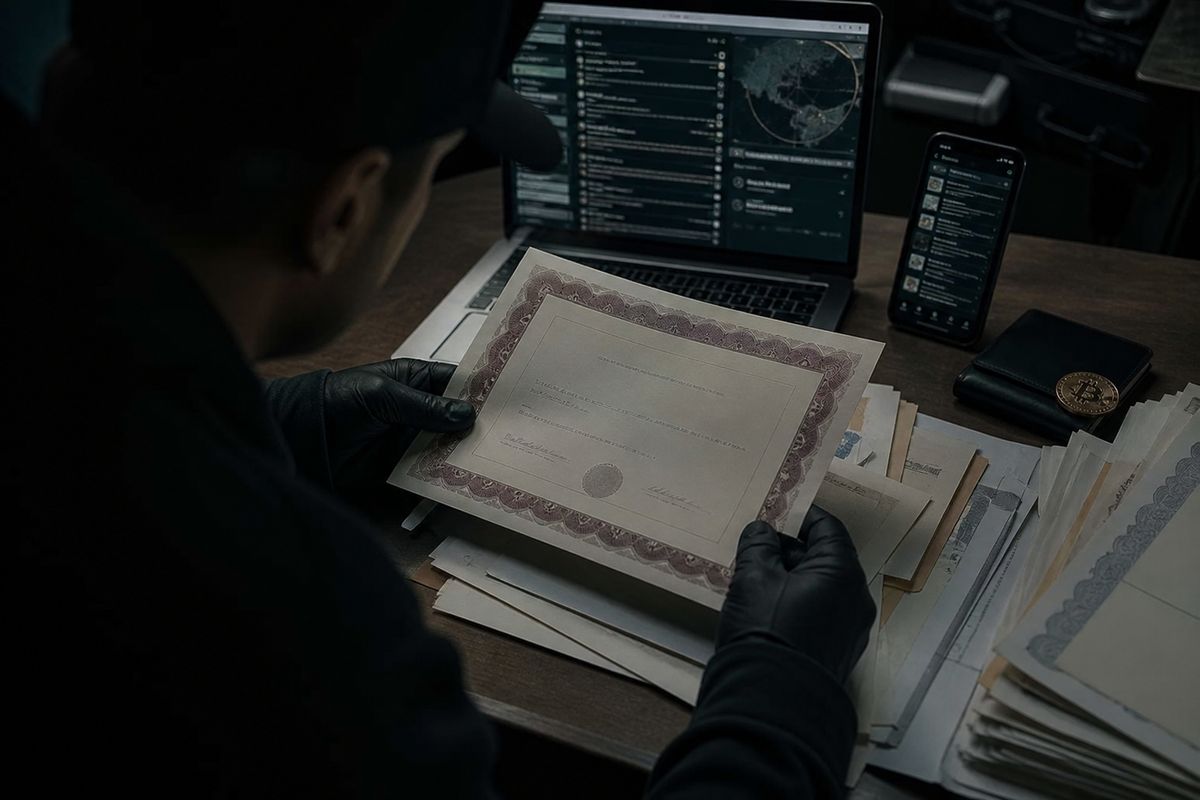
Buying documents online typically means accessing dark web marketplaces through Tor Browser, which routes your traffic through encrypted relay nodes to mask your identity1. Vendors list fake IDs, passports, and diplomas for prices ranging from £50 to several thousand pounds, payable in Bitcoin or Monero. Most markets use escrow systems that hold your cryptocurrency for 14–21 days until you confirm receipt2. Your first step is downloading Tor Browser and locating a marketplace .onion address, though be aware that producing or transferring false identification documents carries penalties of up to 15 years' imprisonment under U.S. law3.
What You Actually Receive
Digital files or physical counterfeits
Vendors typically deliver scanned images, printable templates, or physical documents shipped to a drop address. Quality varies widely, and many items fail basic verification checks used by authorities or institutions.
Escrow protection with strict time limits
Most marketplaces hold your cryptocurrency for 14–21 days while you confirm receipt [2]. If you don't dispute within that window, funds release automatically to the seller—even if the document proves unusable.
Anonymous delivery via Tor-only addresses
Listings appear on .onion sites accessible only through Tor Browser [4], and your first connection can take 10–30 seconds to establish [5]. This anonymity does not shield you from legal consequences if intercepted.
Severe criminal liability under UK and US law
Possessing forged identity documents carries up to five years' imprisonment under 18 U.S. Code § 1002 [6], while passport forgery can result in 10–25 years depending on intent [7]. UK penalties mirror these ranges, and prosecution does not require you to have used the document.
No recourse if the vendor disappears
Wallet-less markets generate unique payment addresses per order [2], so stolen funds cannot be recovered if the seller vanishes. Escrow disputes rely on marketplace staff who may side with the vendor or shut down without warning.
Traceable cryptocurrency trails
Over 80% of Bitcoin addresses on dark web sites link to illicit activity, with transaction volumes around 180 million USD [8]. Even Monero faces deanonymization risks when used through Tor hidden services [9], leaving a permanent record investigators can follow.
Conditions for Buying Documents Online
- Options
- Fake ID
- Price
- £50-£150
- Delivery Time
- 1-2 weeks
- Requirements
- Age verification, photo
- Restrictions
- Legal consequences under U.S. Code § 1028
- Options
- Passport
- Price
- £100-£300
- Delivery Time
- 2-4 weeks
- Requirements
- Personal information, photo
- Restrictions
- Legal consequences under U.S. Code § 1543
- Options
- Diploma
- Price
- £75-£200
- Delivery Time
- 1-3 weeks
- Requirements
- Educational details, photo
- Restrictions
- Legal consequences under U.S. Code § 1002
- Options
- Other Credentials
- Price
- £30-£100
- Delivery Time
- 1-2 weeks
- Requirements
- Specific details as required
- Restrictions
- Varies by document type
How to Buy Documents Online
Step 1: Install Tor Browser and Access the Dark Web
Download Tor Browser from the official project website to access .onion marketplaces. Tor routes your traffic through multiple encrypted relay nodes, making it difficult to track your activity1. Dark web marketplaces use .onion addresses that only work through Tor Browser, protecting both your identity and the site's location4. Your first connection may take 10–30 seconds to establish5. Never use regular browsers or VPNs alone—they won't reach .onion sites and leave you exposed.
Step 2: Obtain Cryptocurrency and Choose a Privacy Coin
You'll need cryptocurrency to pay for documents, as dark web vendors don't accept cards or bank transfers. Bitcoin is widely accepted, but more than 80% of Bitcoin addresses on the dark web are linked to malicious activity, with transaction volumes reaching around £142 million8. Consider Monero instead—it offers stronger privacy by default and is popular in Russia and Iran according to 2024 research10. Buy crypto from an exchange, then transfer it to a private wallet you control. Never send funds directly from an exchange to a marketplace.
Step 3: Find a Marketplace and Verify Vendor Reputation
Locate a marketplace through trusted dark web directories or forums—avoid random links, as phishing sites are common. Once inside, check vendor profiles for feedback scores, completed orders, and dispute history. Look for sellers with hundreds of reviews and at least 95% positive ratings. Read recent feedback carefully to spot patterns of delayed shipping, poor quality, or non-delivery. Avoid new vendors with few reviews or those offering prices far below competitors—both are red flags for scams.
Step 4: Place Your Order and Use Escrow Protection
Select the document type, upload any required photos or details, and place your order. Always use escrow—a system where the marketplace holds your payment until you confirm receipt11. Most markets use a 14–21 day auto-finalize window, releasing funds to the vendor if you don't dispute2. Wallet-less markets generate a unique payment address for each order, so funds go directly to escrow rather than a pooled balance2. This protects you if the marketplace exits scam. Never agree to 'finalize early' or send payment outside escrow, even if the vendor offers a discount.
Step 5: Wait for Delivery and Inspect the Documents
Delivery times vary from 7 days to 6 weeks depending on the vendor's location and shipping method. Track your order through the marketplace's messaging system, but don't share personal details or ask for tracking numbers—vendors rarely provide them. When the package arrives, inspect the documents immediately for print quality, holograms, UV features, and accuracy of your details. Compare them against genuine examples if possible. If the documents are defective or don't match the listing, open a dispute within the escrow window before funds release.
Step 6: Understand the Legal Risks Before Proceeding
Possessing or using fake documents carries severe penalties in most jurisdictions. In the United States, producing or transferring false IDs can result in fines and up to 15 years imprisonment3. Passport forgery penalties range from 10 to 25 years depending on the intended use, with terrorism-related cases receiving the longest sentences7. Even possessing forged documents with intent to defraud carries up to 5 years imprisonment6. Law enforcement agencies monitor dark web marketplaces and have identified over 34 million cryptocurrency addresses linked to illegal activity12. Weigh these risks carefully—buying documents online is not anonymous, and prosecution is a real possibility.
Step 7: Recognize That Anonymity Is Not Guaranteed
Tor and privacy coins reduce traceability but don't eliminate it. A 2024 study showed attackers can deanonymize Monero transactions from Tor hidden service nodes by correlating onion addresses with source IPs9. Bitcoin multisig escrow uses a 2-of-3 key arrangement where the buyer, vendor, and marketplace each hold one key2, but this still leaves transaction records on the blockchain. Researchers have captured about 10 million distinct Bitcoin addresses from 2,886 onion domains12. If you proceed, assume that determined investigators can eventually link your activity to your real identity.
Risks, Limitations, and Guarantees
Purchasing documents online through dark web marketplaces involves considerable risks. Legal consequences are severe; for instance, producing or transferring false identification documents can lead to up to 15 years in prison under U.S. law3. Moreover, possessing forged documents can result in fines and imprisonment for up to five years6.
Transaction limitations are also significant. Most dark web marketplaces use escrow systems that hold your cryptocurrency for 14–21 days until you confirm receipt of the document2. If you do not open a dispute within this timeframe, funds are automatically released to the vendor. This leaves you vulnerable if the document is defective or not delivered.
Before proceeding, verify vendor reputation thoroughly. Look for sellers with a history of successful transactions and positive feedback. Avoid new accounts or those with inconsistent reviews, as they may indicate potential scams.
To cancel or return an order, act quickly. Open a dispute within the escrow window if the document does not meet your expectations. Provide evidence of any defects to support your claim.
Understanding these risks and limitations is crucial. Weigh the potential legal ramifications against the benefits before making a purchase. Always prioritize your safety and consider the long-term consequences of your actions.
Cited sources
- Top 7 Dark Web Marketplaces In 2026: Full Threat Analysis
- How Darknet Escrow Works — and When It Fails
- U.S.C. Title 18 - CRIMES AND CRIMINAL PROCEDURE
- The Tor Network: A Guide to the Dark Web Browser
- Dark Matter Market — Official Link & Access
- 18 USC 1002: Possession of false papers to defraud United States
- 18 U.S. Code § 1543 - Forgery or false use of passport
- An investigative study of cryptocurrency abuses in the Dark Web
- Deanonymizing Transactions Originating from Monero Tor Hidden Service Nodes
- Dark web traffic, privacy coins, and cryptocurrency trading activity
- Escrow Systems - How Darknet Market Escrow Works
- Cybercriminal Minds: An investigative study of cryptocurrency abuses in the Dark Web
Handpicked links. A few related services may help with the next step. Tools & services